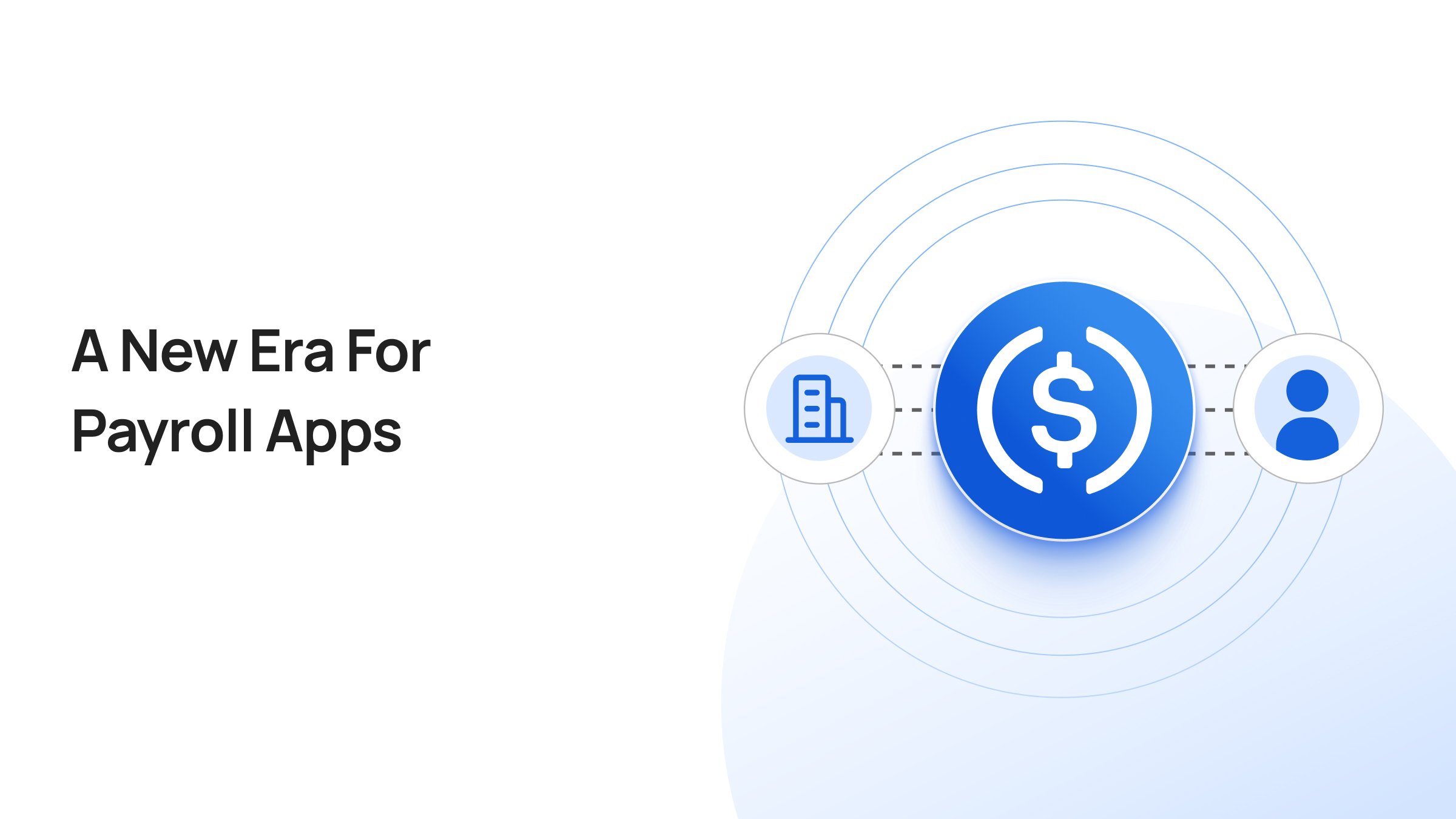
Stablecoins processed more than Visa and PayPal combined in 2025. That number used to live in DeFi research reports. Now it's showing up in payroll product roadmaps.
Remote, Deel, and Papaya Global all shipped stablecoin payout features within the same 12-month window. Not as experiments. As production features serving hundreds of thousands of contractors across 150+ countries.
This piece breaks down the data behind the shift, surveys which platforms have gone live, and maps the regulatory and infrastructure layers that made stablecoin payroll viable in 2026.
Why Are EOR Platforms Adding Stablecoin Payroll Now?
Three converging forces turned stablecoin payouts from a feature request into a competitive necessity:
- Transaction volume that proved product-market fit
- A contractor base already holding crypto wallets
- Cross-border payment costs that traditional rails haven't been able to fix
Stablecoin volume crossed the credibility threshold. 2025 recorded $46 trillion in gross stablecoin transactions ($9 trillion adjusted for non-organic activity). For context, Visa processed approximately $14.5 trillion in 2024. When a payment rail moves more value than the world's largest card network, payroll platforms stop treating it as a niche feature.
The contractor base already owns wallets. The same a16z report indicates, an estimated 716 million people globally own cryptocurrency. Triple-A's 2024 ownership data puts the number at 560 million with 6.9% global penetration. Either way, the audience for stablecoin payouts doesn't need wallet onboarding. They need a "pay me in USDC" button.
Cross-border payment costs haven't budged. The World Bank's Q1 2025 Remittance Prices Worldwide report puts the global average cost of sending $200 internationally at 6.49%. That percentage has barely moved in five years. A contractor in Lagos earning $3,000 monthly from a US company loses roughly $195 per month to intermediary fees, currency conversion spreads, and correspondent banking overhead.
Stablecoin transfers on Solana, Base, or Arbitrum cost fractions of a cent and settle in under 60 seconds. The gap between legacy rails and stablecoin rails isn't closing. It's widening.
Payment Method |
Average Cost (% of transfer) |
Settlement Time |
Currency Risk for Contractor |
|---|---|---|---|
|
SWIFT wire transfer |
3-8% + fixed fees |
2-5 business days |
High (forced FX conversion) |
|
PayPal / Wise |
2-4% |
1-3 business days |
Medium (spread markup) |
|
USDC on Base or Solana |
<1% |
Under 60 seconds |
None (USD-pegged at 1:1) |
Which EOR Platforms Offer Stablecoin Payouts Today?
As of Q1 2026, three of the five largest global EOR platforms have live stablecoin payout features. The implementations differ in approach, but the direction is unanimous, i.e., contractors want this option, and platforms that don't offer it risk losing talent to those that do.
1. Remote: USDC payouts in nearly 70 countries
Remote launched stablecoin payouts through Stripe, starting with USDC on Base. Contractors link a compatible crypto wallet through Stripe Connect and select crypto as their withdrawal method. The feature is currently live for US-based employers paying contractors globally.
2. Deel: Multi-Chain Crypto Withdrawals
Deel supports crypto withdrawals for contractors across multiple blockchain networks, including stablecoin options. With over 700,000 workers on its platform spanning 150+ countries, Deel's crypto capability serves one of the largest contractor pools in the EOR space.
3. Papaya Global: stablecoin-settled cross-border payments
Papaya Global took a different approach. Rather than offering contractors a "pay me in crypto" toggle, Papaya integrated stablecoin settlement into its Payments OS as a backend rail. Stablecoins reduce settlement time and FX costs between the employer's payment and the contractor's local bank account, without requiring the contractor to hold or manage crypto directly.
What's Missing from The List
Not every EOR platform has shipped yet. Oyster HR and several mid-market players still rely exclusively on traditional banking rails for contractor payouts at the time of writing. That gap is a competitive vulnerability.
In a market where contractor retention depends on payment speed and cost, the platforms without stablecoin options are asking contractors to accept slower, more expensive payments for no reason.
Also Read: Stablecoin Payroll Infrastructure for Payroll Providers [2026 Guide]
What Do Contractors Actually Want from Stablecoin Payroll?
Contractor demand for stablecoin payouts varies by geography, income level, and financial infrastructure access. Reducing it to "people want crypto" misses the specific pain points driving adoption.
In volatile economies, contractors want dollar stability. Argentina's peso lost over 200% of its value against the dollar in recent years. Mobile crypto wallet usage in Argentina grew 16x over three years. A developer in Buenos Aires paid in USDC holds a dollar-pegged asset without needing a US bank account, a restriction that excludes most of the global workforce from dollar savings.
Colombia, India, and Nigeria show similar wallet growth patterns. These are also among the largest contractor markets for EOR platforms. The overlap is not a coincidence.
Everywhere, contractors want speed over ideology. A freelancer managing cash flow across three clients doesn't care about blockchain philosophy. They care that USDC arrives in their wallet in 40 seconds while a SWIFT transfer takes 4 days.
Optionality beats exclusivity. Triple-A's data shows 65% of crypto holders prefer crypto payment options when available. But the word "prefer" does real work in that sentence. The most successful implementations offer stablecoins alongside bank transfers and PayPal. Contractors pick per payment. Some months it's USDC. Some months it's a wire to their local bank.
How Does Stablecoin Payroll Regulation Differ by Market?
Regulatory readiness determines where EOR platforms can offer stablecoin payouts today and where they'll expand next. The gap between jurisdictions is significant, and it shapes the competitive landscape for both EOR providers and the infrastructure layer beneath them.
United States
The GENIUS Act (2025) established a federal framework for stablecoin issuance, reserve requirements, and payments. US-based EOR platforms operate with clear legal authority to offer stablecoin payouts. Circle and Paxos both hold licenses under this framework. This is the most mature regulatory environment for stablecoin payroll.
European Union
MiCA (Markets in Crypto-Assets Regulation) provides comprehensive rules for stablecoin issuance and service provision. Société Générale's FORGE subsidiary issued EURCV and USDCV (purchasable via Transak) as MiCA-compliant stablecoins on Ethereum, becoming the first G-SIB (Global Systemically Important Bank) subsidiary to do so. The infrastructure for euro-denominated stablecoin payroll exists, but EOR adoption remains early.
United Kingdom
The FCA published consultation papers on stablecoin regulation in 2024 and 2025, treating qualifying stablecoins as regulated payment instruments. Final rules are pending, but the direction favors enabling stablecoin payments.
What Happens to Stablecoin Payroll in the Next 12 Months?
The platforms that shipped stablecoin payouts in 2025 and 2026 were responding to measurable contractor demand, maturing infrastructure, and regulatory green lights. The next phase is about what becomes standard and what remains differentiated.
Below are a few possible scenarios (this information should not be considered definitive and are merely an extrapolation based on current trends as per the author’s personal experience).
Stablecoin payouts become a baseline EOR feature. Within 18 months, offering stablecoin withdrawals will be as expected as offering bank transfers. EOR platforms without the option will lose contractors in high-growth markets like Latin America, Southeast Asia, Sub-Saharan Africa. These are the regions where cross-border payment friction is highest and crypto wallet adoption is growing fastest.
The conversion layer determines contractor experience. EOR platforms handle the payment from employer to contractor. But what happens after the stablecoin hits the contractor's wallet defines whether the feature actually gets used. Can the contractor convert to local currency without a 3% spread? Can they pay rent with it? The platforms that partner with infrastructure providers covering local payment methods, local currencies, and local compliance across dozens of markets will deliver a meaningfully better experience than platforms that stop at "we support USDC."
Programmable payroll features emerge. Stablecoins on programmable blockchains enable capabilities traditional banking cannot replicate, like automated split payments (50% USDC, 50% local currency), milestone-based fund release for project contractors, real-time payment streaming instead of monthly invoicing.
Where Transak Fits in the Stablecoin Payroll Stack
Stablecoin payroll follows what the industry calls the stablecoin sandwich: fiat in, stablecoin transfer, fiat out. The employer pays in dollars or euros. That payment converts to USDC for the cross-border transfer. The contractor converts USDC back to local currency on the other end.
EOR platforms handle the middle. Transak powers both ends.
On the origination side, our infrastructure converts the employer's fiat payment into stablecoins. On the last-mile delivery side, it converts the contractor's stablecoins back into local currency through local bank transfers, mobile money, or region-specific payment methods.
We also hold registrations in the US, UK, Canada, Australia, Poland, India, and Hong Kong. Origination and delivery each carry distinct regulatory requirements. Having a single provider licensed for both sides simplifies the compliance conversation for EOR platforms.
FAQs
What is stablecoin payroll?
Stablecoin payroll is a payment method where employers or EOR platforms pay contractors in stablecoins like USDC instead of traditional bank transfers. Stablecoins are digital currencies pegged 1:1 to fiat currencies (typically the US dollar), combining the speed and low cost of blockchain transactions with the price stability of conventional money. Contractors receive funds in seconds rather than days.
Which EOR platforms support crypto payouts in 2026?
As of Q1 2026, Remote offers USDC payouts via Stripe in nearly 70 countries. Deel supports multi-chain crypto withdrawals across 150+ countries. Papaya Global uses stablecoin settlement as a backend payment rail. Several other platforms, including Oyster HR and Velocity Global, have not yet launched stablecoin features.
How do contractors convert stablecoins to local currency?
Contractors use fiat-to-crypto infrastructure providers to convert stablecoins like USDC into their local currency. Providers like Transak operate across 64+ countries, supporting local payment methods and local bank transfers. The contractor initiates a conversion through the provider's interface, and funds arrive in their local bank account or mobile money wallet, typically within minutes.