In traditional fintech, payment processors do not launch consumer banking apps. Adyen does not compete with Shopify. Stripe does not sell directly to the customers of its merchants. The line between infrastructure and application is clearly drawn, and both sides benefit from keeping it that way.
In crypto payments, that line barely exists.
Multiple on-ramp and off-ramp providers now operate consumer-facing products alongside their B2B infrastructure services. Some run standalone apps. Others have launched branded wallets. A few actively market to users who originally entered through partner integrations.
This creates a structural problem that no amount of trust, partnership agreements, or good intentions can solve. When your infrastructure provider is also your competitor, the relationship has a built-in expiration date.
Checking infrastructure fidelity helps in evaluating whether your payments partner's business model is designed to support your growth or eventually undermine it.
What Is Infrastructure Fidelity
Infrastructure fidelity is not a feature. It is not an API capability or a compliance certification. It is a structural property of a company's business model that determines whether its long-term incentives are compatible with yours.
A payments partner is infrastructure-aligned when three conditions are true simultaneously.
- Revenue dependency on partner success: Providers should only earn when partners process transactions, ensuring incentives remain focused on your growth rather than direct consumer monetization.
- No independent user relationships: Aligned partners process transactions without building their own brand equity, user base, or marketing pipelines from your traffic.
- Partner-centric product roadmap: All engineering and product resources should improve the B2B offering, not support a parallel consumer business that competes with yours.
When all three conditions hold, the partnership is structurally sound. When any one of them breaks, the partnership carries risk that compounds over time.
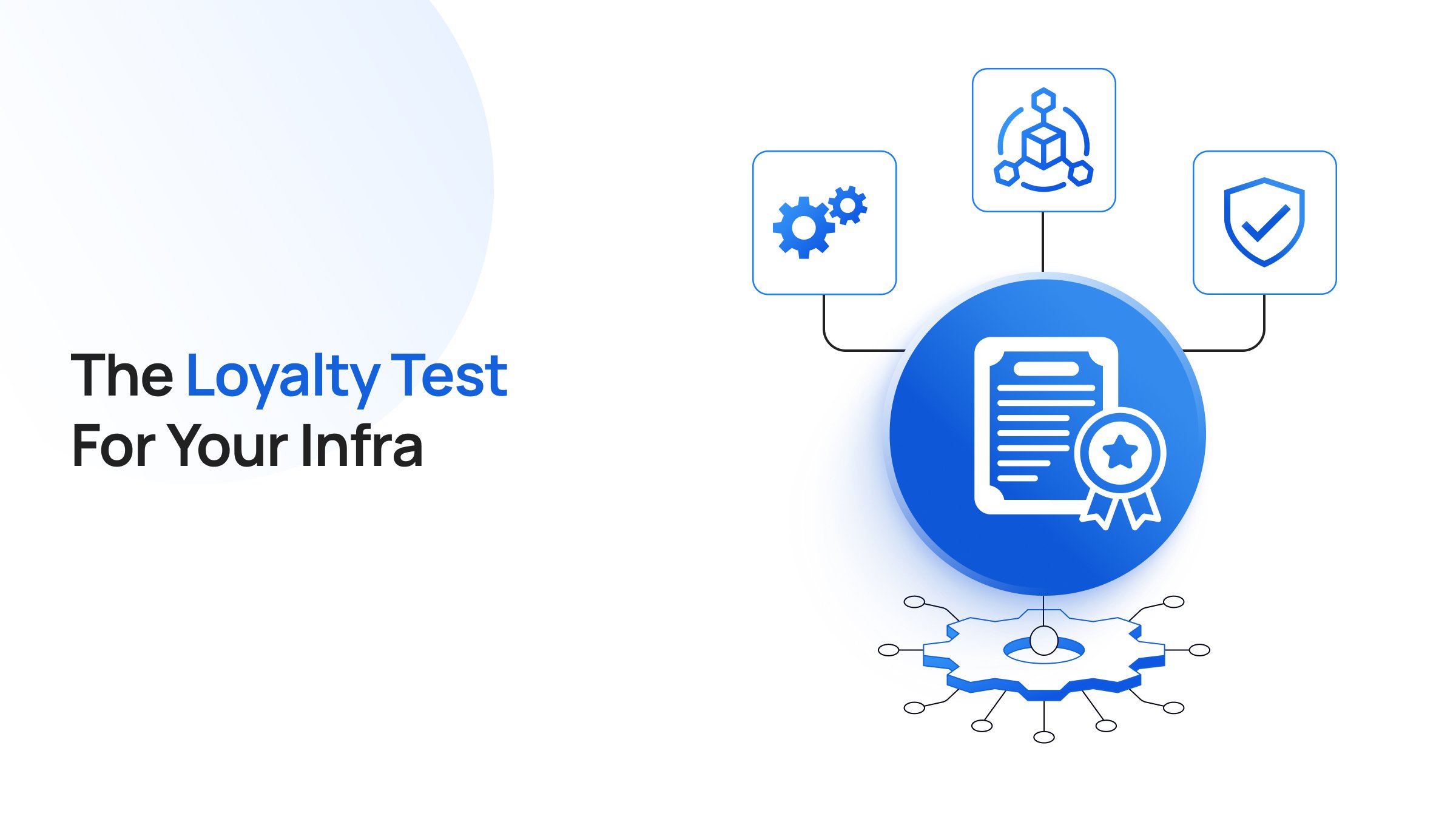
The Five-Point Fidelity Audit
The following framework gives product, BD, and infrastructure teams a repeatable way to evaluate any crypto payments partner. Each point maps to a specific structural risk.
1. Product Overlap Test
Question: Does the provider operate any product that a user could choose instead of yours?
This includes consumer wallets, direct buy/sell interfaces, standalone apps, card products, and peer-to-peer transfer features. The test is not whether the provider calls it a "consumer product." The test is whether a user could accomplish the same task through the provider's own product instead of through yours.
If the answer is yes, you have a product overlap. The provider is simultaneously your vendor and your competitor.
What to look for: Check the provider's App Store and Google Play listings. Check their website for any "Buy Crypto" or "Sell Crypto" pages that serve end users directly rather than linking to partner applications. Check their press releases for language about "user growth" or "consumer adoption," both signals of a consumer play.
2. User Ownership Test
Question: After a transaction is completed through your application, who owns the user relationship?
In a well-aligned integration, the user interacts with your brand from start to finish. The infrastructure provider is invisible. The user's account, KYC verification, and payment credentials belong to the partner's ecosystem.
In a misaligned integration, the user must create an account with the provider. The provider collects email addresses, phone numbers, and identity documents under its own brand. Even if the transaction happens inside your app, the user now has a direct relationship with your infrastructure provider.
What to look for: Go through your own on-ramp or off-ramp flow as a new user. Note every screen where the provider's brand appears. Note whether the user creates an account with the provider. Note whether the user receives emails from the provider after the transaction. If the user remembers the provider's name more than yours, the provider owns the relationship.
3. Data Exploitation Test
Question: Can the provider use data from your integration to benefit its other products or its own consumer business?
An aligned provider treats partner transaction data as confidential. Data from Partner A is not used to improve the product for Partner B, and it is certainly not used to inform a competing consumer product.
A misaligned provider aggregates data across all integrations to build a market-level view that advantages its own products. It knows which tokens are trending across your competitors before you do. It knows which price points convert best. It knows which user demographics are most valuable.
What to look for: Read the provider's data processing agreement and privacy policy. Look for clauses that permit "aggregated" or "anonymized" data usage for "product improvement" or "research." These clauses often provide legal cover for cross-partner data exploitation. Ask the provider directly whether data from your integration can influence any product other than the one you integrated.
4. Incentive Structure Test
Question: Does the provider's capital structure require consumer-scale returns?
A company that has raised $500 million at a multi-billion-dollar valuation faces pressure from investors to deliver returns that B2B infrastructure margins alone cannot easily provide. B2B payment processing generates thin margins on high volume. Consumer fintech products generate higher margins through direct user monetization, premium features, and financial product cross-selling.
When a provider's valuation implies consumer-scale revenue, a consumer product is not a possibility. It is a requirement. The only question is timing.
What to look for: Check the provider's funding history on Crunchbase or PitchBook. Compare their valuation to their estimated B2B revenue. If the valuation implies a revenue multiple that only makes sense with a consumer business, the consumer pivot is already priced in. Investors will demand it.
5. Exit Path Test
Question: If you needed to switch providers tomorrow, how much of your user base would you lose?
This is the test that reveals how much leverage your current provider has accumulated. If users completed KYC with the provider and saved payment methods under the provider's account system, switching means asking those users to start over with a new provider. Re-verification, re-entering card details, re-building transaction history.
In an aligned integration, switching providers is an engineering task, not a user migration crisis. Users authenticated with your system, not the provider's. Their data lives in your ecosystem. The provider is a replaceable processing layer.
What to look for: Run a thought experiment. If you switched providers today, what percentage of your users would need to re-verify their identity? Would any users refuse to switch because they prefer the existing provider's ecosystem? If the answer to the second question is anything other than zero, the provider has built a lock-in that works against you.
Scoring the Audit
Each test produces one of three results.
Aligned: The provider's structure supports your interests. No corrective action needed.
Partial Risk: The provider's structure creates potential for misalignment, but no active conflict exists today. Monitor and include protective clauses in your agreement.
Misaligned: The provider's structure actively conflicts with your interests. The risk compounds over time and should be addressed through migration planning.
If a provider scores "misaligned" on two or more tests, the relationship carries structural risk that no SLA, partnership tier, or revenue share can mitigate. The conflict is in the business model, not in the execution.
High Infrastructure Fidelity Is a Competitive Advantage
Choosing an aligned infrastructure partner provides significant long-term structural advantages.
- User Ownership: You maintain full control over the user relationship and data without third-party competition.
- Focused Investment: Engineering resources are dedicated solely to improving B2B features like settlement and compliance.
- Market Clarity: Eliminates brand confusion and the risk of your provider marketing to your own users.
- Flexibility: Treating the provider as a replaceable layer preserves your negotiating leverage and switching freedom.
How Transak Is Structured for Fidelity
Transak was designed from the beginning as infrastructure that partners embed, not infrastructure that competes.
Transak's suite of products are built primarily for partner integration.
Users interact with your brand. KYC and compliance serve regulatory requirements, not a CRM funnel. Transaction data is used to improve the infrastructure, not to inform a competing product.
Transak processes transactions for 600+ applications including leading wallets, exchanges, and remittance apps. The company's revenue model depends entirely on partner transaction volume. When partners grow, Transak grows. There is no structural incentive to redirect, compete, or undercut.
This is what good infrastructure alignment looks like in practice. Not as a promise, but as a business model.
Run the five-point alignment audit on your current payments stack. If you want to discuss the results, talk to our team. Or start with the integration docs to see how Transak's infrastructure works inside your product.