Takeaways
To pay a recipient in seconds, you have to hold money in the destination country before the sender's funds ever arrive. That capital sits idle, spread across every corridor you serve.
Just-in-time liquidity helps by sourcing funds on demand instead of parking them in advance.
This article breaks down pre-funding versus just-in-time settlement, why stablecoins make the on-demand version practical, and where a regulated on-ramp and off-ramp fit.
What pre-funding actually costs
Pre-funding means positioning capital in destination accounts before any payment arrives, so a provider can pay recipients instantly.
Traditional remittance locks up that capital in nostro accounts across every corridor. Settlement through correspondent banks still takes 2 to 5 business days, and the money sits idle the whole time.
A cross-border payment rarely moves in a straight line. It hops through a chain of correspondent banks, often routing through a New York intermediary, with each bank holding a nostro account at the next. Nostro and vostro accounts are the mirrored balances banks park with each other to settle in local currency.
Multiply that across every corridor and the cost compounds. The World Bank puts the global average cost of sending money at about 6.4%, roughly $31 on a $500 transfer.
The deeper cost is the idle capital itself.
To serve ten corridors, you pre-fund ten sets of destination accounts, each holding a different currency you cannot deploy elsewhere. That is working capital frozen on the balance sheet.
Also Read: Stablecoin Remittances: The Next Frontier in Fintech
What just-in-time liquidity changes
Just-in-time liquidity sources funds on demand instead of pre-positioning them. Because stablecoins are fungible, you hold one pool of USDC that can service any corridor without pre-funding each destination. On-chain value moves in about 2 to 10 minutes, sometimes seconds, at near-zero transfer cost, regardless of the route.
A dollar of USDC is the same asset wherever it settles. So, a single treasury pool can cover them both. You convert fiat to stablecoin at the sending end and stablecoin to fiat at the receiving end, both on demand.
Picture a UK-to-Philippines payout and a US-to-Nigeria payout drawn from the same USDC balance in the same hour. Neither corridor needed its own pre-funded account. That balance can settle across chains such as Ethereum, Solana, Base, and Polygon, so routing follows cost and speed instead of a fixed banking relationship.
Also Read: How Remittance Companies Use Stablecoins to Reduce Settlement from Days to Minutes
While this reduces pre-funding requirements, it does not erase counterparty or currency risk, and you still hold a working balance. What changes is how much capital you strand to hit the same payout speed.
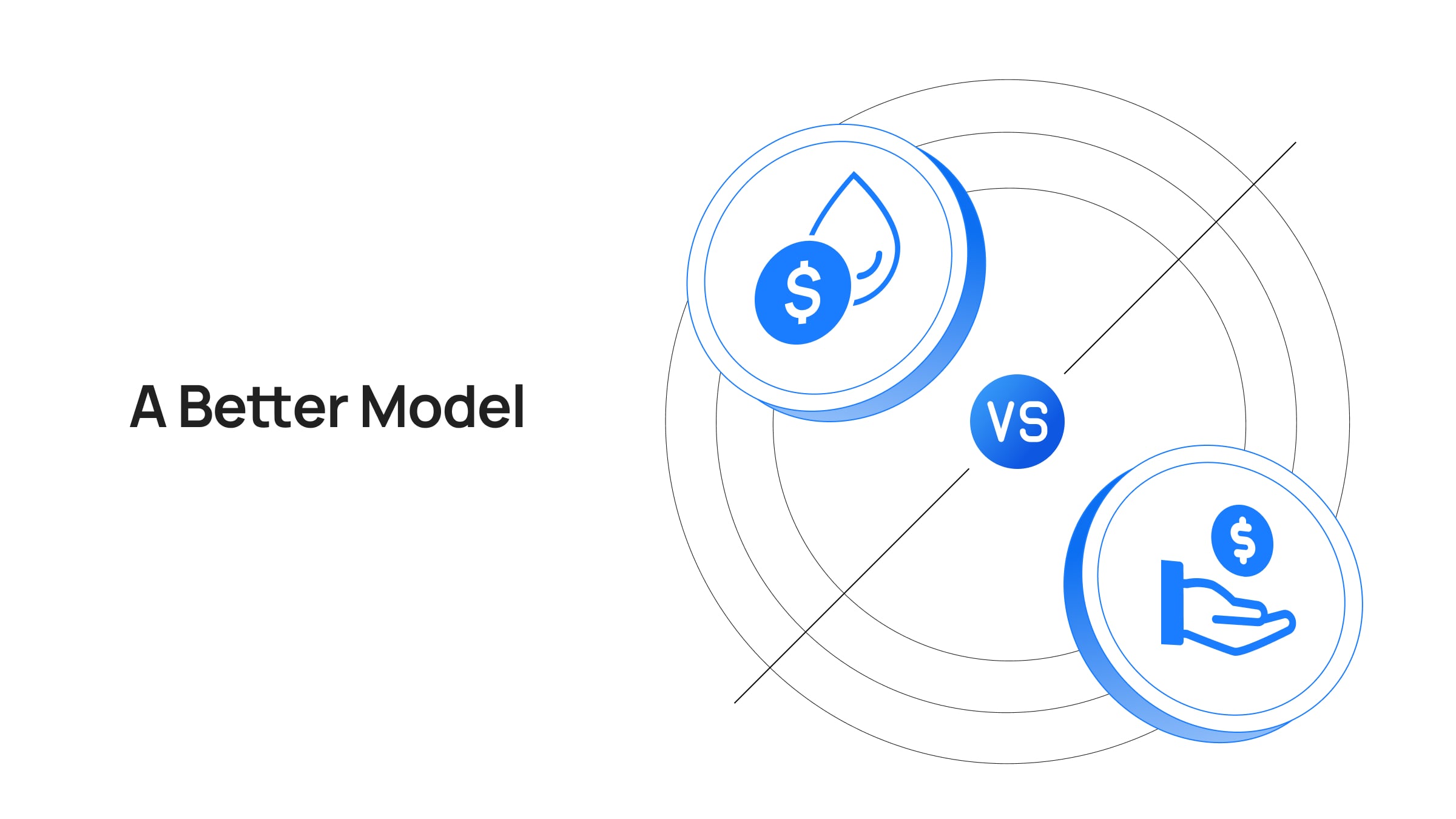
Pre-funding vs just-in-time liquidity
Both models can deliver an instant payout to the recipient. The difference is where the money waits. Pre-funding strands capital in local-currency accounts in every corridor and reconciles across many bank statements. The on-demand model holds one stablecoin pool, converts as payments move, and reconciles against on-chain proofs.
|
Pre-funding |
Just-in-time liquidity |
|
|
Where capital sits |
Idle in nostro and vostro accounts in every corridor |
One fungible USDC pool, deployed on demand |
|
Settlement speed |
2 to 5 business days |
2 to 10 minutes, sometimes seconds |
|
Corridor coverage |
New accounts and banking ties per corridor |
Any corridor the same pool can reach |
|
Cost |
About 6.4% global average (World Bank) |
Near-zero on-chain transfer cost, plus on/off-ramp fees |
|
FX exposure |
Balances held in many currencies at once |
Convert at each end, fewer standing balances |
|
Reconciliation |
Manual, across many correspondent statements |
Automatic, against on-chain proofs |
The stablecoin settlement flow
Our settlement flow runs in three stages.
- First, funding and conversion turns fiat into stablecoins directly under the hood.
- Second, disbursement batches transfers that settle within seconds or minutes depending on the chain.
- Third, treasury and accounting uses on-chain proofs for transparent records and automatic ledger reconciliation.
|
Stage |
What happens |
|
Funding and conversion |
Convert local fiat into stablecoins directly or via OTC |
|
Disbursement |
Transfers batch and settle in seconds or minutes, depending on the chain |
|
Treasury and accounting |
On-chain proofs give transparent records with automatic ledger reconciliation |
Each stage reports back to your systems. Payout instructions carry the recipient, amount, and delivery preference, and we handle conversion, routing, delivery, and reconciliation, with webhooks at every state change.
Transak Stream applies the same flow to recurring cash-out. After a one-time setup, a recipient sends crypto to a unique deposit address and receives fiat to a registered bank account or card, with no widget to open at the moment of payout. Most stablecoin payroll flows finish in under an hour, against 3 to 5 business days for correspondent banking.
Where Transak fits
Running just-in-time liquidity needs a regulated party to convert between fiat and stablecoin at both ends. Transak is that rail.
With Transak, a single integration gives you the on-ramp in sending markets and the off-ramp in destination markets, with KYC, AML, and local payment licensing owned by us, so you stop pre-funding destination accounts.
We source liquidity just in time at each end.
- On the collection side, Virtual Account Payments gives users named local bank accounts that auto-convert incoming fiat to stablecoin.
- On the delivery side, Transak Off-Ramp turns stablecoin back into fiat in the recipient's local account.
Both sit behind one Transak integration, across 64+ countries.
In sending markets, users pay in with local methods, cards, and bank transfers. We cover 136+ crypto assets across 45+ blockchains, so the same integration reaches new corridors without rebuilding the stack.
We own the regulated layer. Transak holds licenses including in the United States, the UK, Canada, Australia, and Hong Kong, and carries ISO 27001:2022 and SOC 2 Type II. You get the compliance stack, KYC, AML, and fraud prevention, without building it.
FAQs
What is just-in-time liquidity in remittance?
Just-in-time liquidity sources settlement funds on demand instead of pre-positioning them in destination accounts. A provider holds one fungible pool of stablecoins and converts fiat to stablecoin and back at each end of a transfer, so the same capital can service any corridor without being frozen in local-currency accounts.
How is just-in-time liquidity different from pre-funding?
Pre-funding parks capital in nostro and vostro accounts in every corridor before payments arrive. The just-in-time approach keeps one stablecoin pool and deploys it on demand. Both can pay recipients instantly, but pre-funding strands working capital across many currencies while the on-demand model cuts how much sits idle.
Do stablecoins settle faster than correspondent banking?
Yes. Correspondent banking moves through intermediary banks and takes 2 to 5 business days. On-chain stablecoin transfers settle in about 2 to 10 minutes, sometimes seconds, regardless of corridor, at near-zero transfer cost. Conversion at each end adds some time and fees, but total settlement stays far shorter.
Does just-in-time liquidity remove currency risk?
No. It reduces how much capital you pre-fund and how many local-currency balances you hold, but it does not erase FX or counterparty risk. You still keep a working balance and convert at market rates. The gain is capital efficiency and speed, not the removal of all risk.
What does Transak provide for a remittance build?
Transak is the regulated on-ramp and off-ramp behind the model. One integration converts fiat to stablecoin in sending markets and stablecoin to fiat in destination markets, across 64+ countries, with KYC, AML, and local licensing owned by us. Virtual Account Payments and Off-Ramp cover collection and delivery.