Cryptocurrency transactions are often described as pseudonymous, but that does not mean they are completely outside financial regulations. As governments work to prevent money laundering, terrorist financing, and other illicit financial activity, crypto businesses are increasingly required to collect and share information about people involved in transactions.
One of the most important regulations in this area is the Travel Rule.
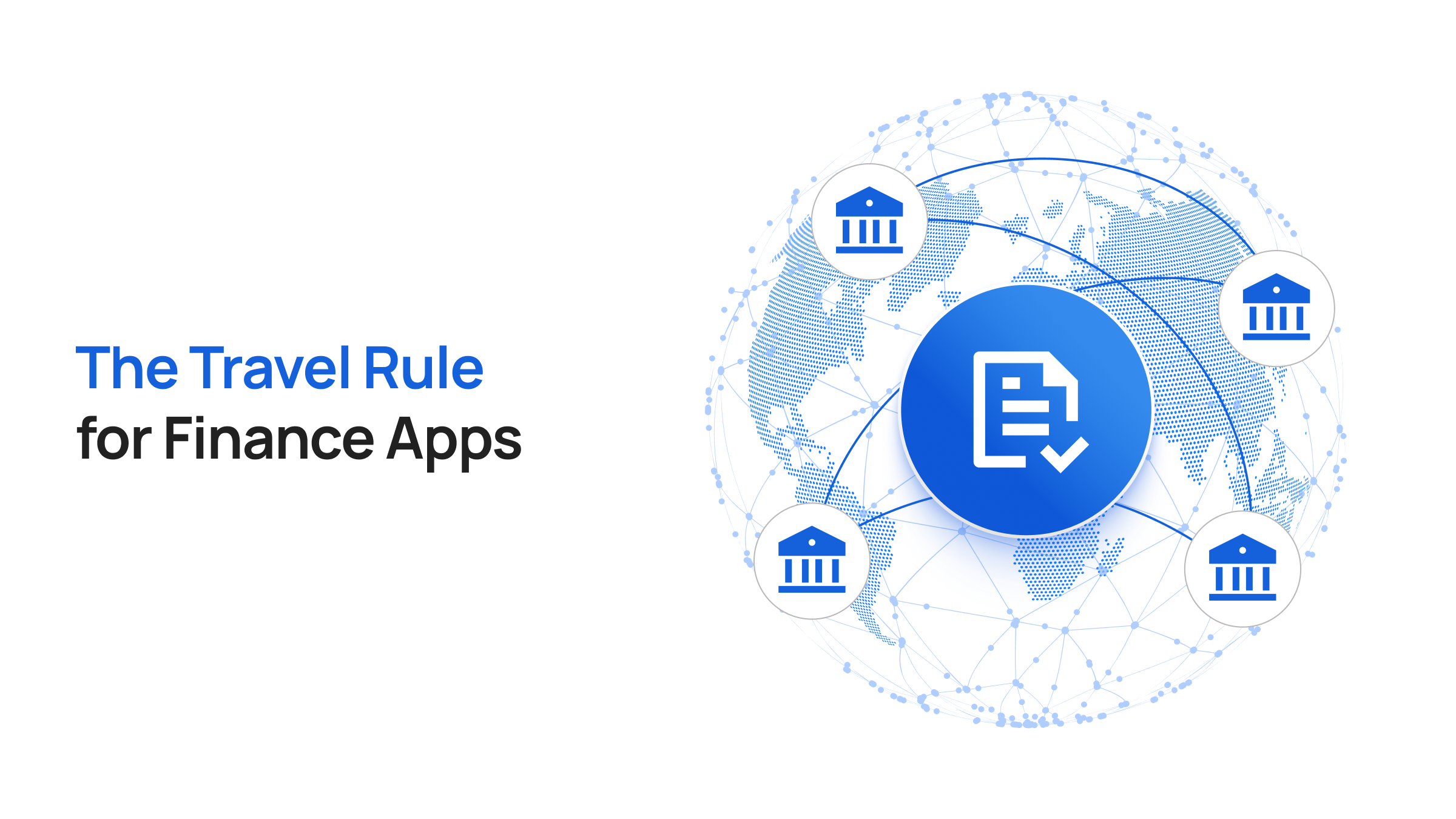
The Travel Rule requires financial institutions and crypto businesses to attach identifying information about the sender and the recipient to a transfer, then pass it to the next institution in the chain. It applies to virtual asset transfers in most major markets.
Also Read: Is Transak Safe? Licenses, Security & How It Protects You
What is the Travel Rule?
FinCEN introduced it in the United States in 1996 under the Bank Secrecy Act, requiring banks to pass sender and recipient details alongside wire transfers of $3,000 or more.
In 2019 the Financial Action Task Force extended the same principle to virtual assets through Recommendation 16. Crypto businesses, which FATF calls virtual asset service providers or VASPs, now have to do what banks have done for three decades.
In simple terms, when you send crypto through a regulated exchange or other covered crypto service, that provider may need to know:
- Who is sending the funds
- Who is receiving the funds
- Relevant account or wallet information
- Other identifying information required by local regulations
Also Read: How Emerging-Market Neobanks Offer Usable US Dollar Accounts on Stablecoin Rails
When does the Travel Rule apply?
Three conditions generally have to be met.
- A regulated institution is involved. A VASP, exchange, on-ramp, custodian or bank sits on at least one side of the transfer
- The transfer crosses institutions. Movement inside a single platform is usually out of scope
- The value clears the local threshold. But the threshold is not the same anywhere.
|
Jurisdiction |
Threshold for crypto transfers |
|---|---|
|
FATF recommendation |
USD 1,000 |
|
United States |
$3,000 under the Bank Secrecy Act. A proposal to cut cross-border transfers to $250 has been pending since 2020 |
|
Singapore |
SGD 1,500 under MAS Notice PSN02 |
|
Switzerland |
Zero |
Why Does the Travel Rule Exist?
The main purpose of the Travel Rule is to reduce the anonymity that criminals can exploit when moving money.
Traditional financial systems already have mechanisms for identifying senders and recipients. Crypto introduced a different model where users can transfer assets directly between blockchain addresses without revealing their real-world identity on-chain.
The Travel Rule helps bridge that gap by requiring regulated intermediaries to maintain an information trail for covered transactions.
This supports broader anti-money laundering (AML) and counter-terrorist financing (CFT) efforts. FATF considers the Travel Rule an important part of making originators and beneficiaries identifiable rather than anonymous.
What information has to travel?
At minimum, for every transfer in scope:
Originator
- Full name
- Account number or wallet address
- One of a physical address, national identity number, customer identification number, or date and place of birth
Beneficiary
- Full name
- Account number or wallet address
Does the Travel Rule apply to self-custody wallets?
A self-custody or unhosted wallet is a wallet controlled directly by the user rather than by a crypto service provider. Sending crypto between two self-custody wallets does not involve a VASP in the transaction itself.
However, the situation can change when a regulated exchange sends crypto to or receives crypto from a self-custody wallet. FATF guidance specifically discusses VASP transfers involving unhosted wallets and recommends specific measures for these transactions.
As a result, an exchange may ask you to provide additional information or verify ownership of a wallet before allowing a withdrawal.
Also Read: Why Are Wallets Becoming Banks?
Does the Travel Rule apply to every cryptocurrency?
Not necessarily.
The Travel Rule is primarily a regulatory obligation on covered financial institutions and virtual asset service providers, rather than a feature built into a particular cryptocurrency.
Whether a transaction triggers Travel Rule requirements depends on factors such as:
- The jurisdictions involved
- Whether a regulated VASP or financial institution is involved
- The type and value of the transfer
- Local AML/CFT regulations
- Whether the destination is another VASP or a self-custody wallet
This is why the experience can differ between exchanges, countries, and transaction types.
Travel Rule vs. Blockchain Transparency
The Travel Rule and blockchain transparency are not the same thing.
Blockchains can publicly show wallet addresses, transaction amounts, and transaction histories. But a wallet address does not necessarily reveal the real-world identity of its owner.
The Travel Rule operates at the service-provider level, requiring regulated businesses to collect and exchange identifying information about transaction participants.
In other words, blockchain data tells you what happened on-chain, while Travel Rule compliance can help regulated institutions establish who is involved.
Where implementation actually stands
On paper, coverage is wide. FATF's seventh targeted update, published in July 2026, found that 83% of surveyed jurisdictions had passed Travel Rule legislation, up from 73% a year earlier.
Enforcement looks different. Only around 40% of the jurisdictions with legislation in place have taken any supervisory or enforcement action.
That gap creates the practical problem the industry calls the sunrise issue.
Transfers arrive from counterparties in markets that do not require the data, so a compliant firm receives deposits with nothing attached and has to decide what to do with them. Most set a policy in advance, ranging from requesting the information directly to restricting activity with specific jurisdictions.
Conclusion
The Travel Rule is essentially an information-sharing requirement for certain financial and crypto transactions. It was created to make it harder for criminals to move illicit funds anonymously and has become an important part of crypto AML/CFT regulation.
Three things worth settling before you launch a corridor.
- Check the threshold in every market you touch, not only your home market
- Decide in advance how you handle incoming transfers with missing data
- Confirm your provider can transmit Travel Rule data on the protocols your counterparties actually use, such as TRISA, TRUST or TRP
Most teams building on regulated on-ramp infrastructure inherit this rather than building it. Transak runs Travel Rule checks as part of its transaction risk layer, so partners are not standing up counterparty messaging themselves.
FAQ
What is the $3,000 Travel Rule?
It refers to the US recordkeeping threshold under the Bank Secrecy Act. Financial institutions must collect and retain originator and beneficiary information on transfers of $3,000 or more. FinCEN clarified in 2019 that this applies to convertible virtual currency as well as traditional wires.
Does the Travel Rule apply to stablecoins?
Yes. Stablecoins are virtual assets under the FATF standards, so a transfer between two regulated providers carries the same obligations as any other virtual asset transfer. FATF published a targeted report on stablecoins and unhosted wallets in March 2026.
Does the Travel Rule apply to self-hosted wallet transfers?
Partly. There is no counterparty institution to send data to, but the regulated side still collects originator and beneficiary information. In the EU, transfers above €1,000 to or from a self-hosted wallet also require verification that the customer controls the wallet.
Is there a global Travel Rule threshold?
No. FATF recommends USD 1,000, but jurisdictions set their own. The EU and Switzerland apply a zero threshold, the US applies $3,000, and Singapore applies SGD 1,500.