Takeaways
In 2019 Sami Start decided blockchains would become the settlement layer under financial services, and built Transak on that assumption. Today, that thesis is materializing.
On a recent fintech leaders podcast he set out where he thinks the next decade goes.
Same goal post, different pathway
He expected users to learn the technology.
In 2019 the working assumption across the industry was that people would operate wallets, understand what a chain was, and choose applications because those applications were onchain.
In reality, stablecoins arrived first and the industry began building tools and products that abstracted the technical complexity to use blockchain… for the most part.
The applications scaling today look like ordinary banking and remittance products while the blockchain sits in the shadows. The on-ramp and off-ramp connect it to the money people already hold, and the user is never told any of this is happening.
Prediction 1: Wallets, banks and exchanges will become the same product
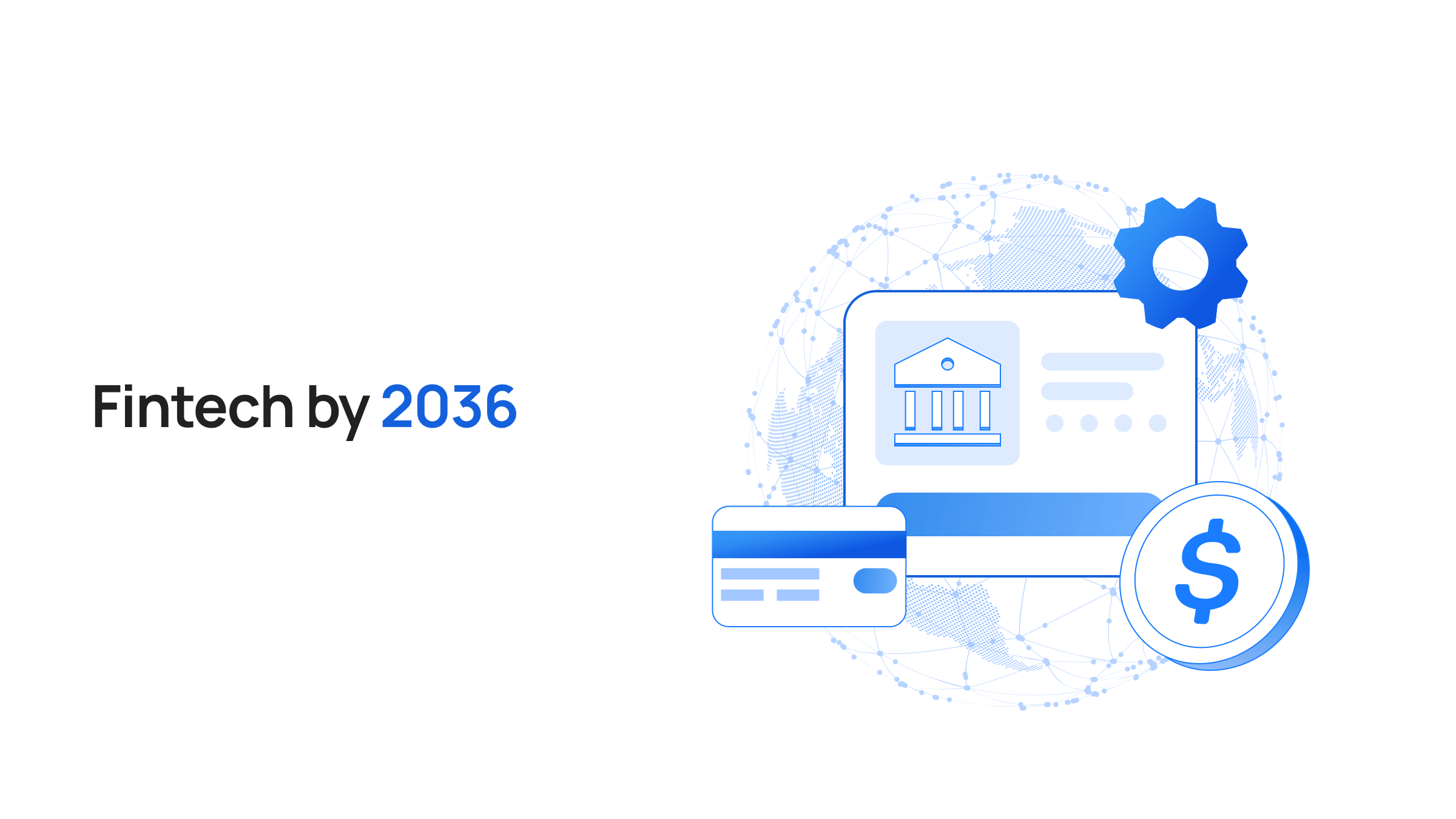
Start's first call is that three types of companies are converging on the same product without setting out to:
- Wallets are adding fiat on-ramps and off-ramps, which turns a place to hold assets into a place to move money
- Banks are adding blockchain settlement and stablecoins, mostly under pressure
- Exchanges already run both, and have for years
For instance, a consortium of large US banks including JPMorgan, Bank of America, Citigroup and Wells Fargo is building a shared tokenized deposit network through The Clearing House, targeting 2027. By Q2 2026, 24 of the 50 largest US banks were tracking tokenized deposits and four had live products.
None of that is enthusiasm.
Bank of America's Brian Moynihan forecasts that as much as $6 trillion in US deposits, roughly a third of the commercial base, could migrate into stablecoins under some regulatory outcomes.
Follow all three lines forward and you land on one product. An application where you hold value, send and receive money, and reach financial services, with a blockchain underneath and no reason for the user to care what the provider used to be.
Prediction 2: Reusable identity will make finance accessible in one click
Money has already become self-sovereign in a real sense. Hold your own keys and no institution sits between you and your balance.
Identity has not caught up and that shows in the numbers:
- The ID upload step alone loses 15% to 30% of users
- Around 70% of financial institutions have lost clients to slow onboarding, up from 48% in 2023
Every one of those checks repeats work another institution already did.
That is why Transak launched KYC Reliance and Auth Reliance as modules that apps can easily integrate.
By integrating Transak and choosing KYC Reliance and/or Auth Reliance, applications can pass their KYC check and authentication token to Transak and save their users from having to re-verify themselves when interacting with an integrated Transak product.
Prediction 3: Financial products will be rebuilt on-chain
Start's third prediction is that equities, treasuries, lending and insurance get rebuilt on blockchain rails while the interface stays recognisable. As a result, fees fall, money moves across borders without a correspondent chain, and products become programmable.
Think of it this way. International calls used to be expensive, unreliable and controlled by a small number of telecoms companies. Once voice moved onto the internet the call became free and instant. While the product did not change, the infrastructure underneath it did. It’s the same with traditional finance and blockchain.
Programmability is the part with no equivalent in the old system.
Smart contracts allow conditional money movement without an intermediary executing it, so a business can route incoming funds automatically rather than through a person approving each transfer.
Prepare for the future with Transak
Regardless of what comes true and how, one thing remains unchanging is the necessity for a new-age payments infrastructure provider by applications so they can tap into the future.
Transak is building stablecoin payments infrastructure for fintech businesses worldwide and enabling them to improve bottom lines by integrating stablecoins into their financial operations.